The World of Interiors
Advisory Blog for Construction & Interiors
Turgut Cansever: Conscience-Based Architecture: Connecting Tradition with Vision
Few people in the history of world architecture have managed to juggle ethics, craftsmanship, and intelligence with the grace of Turgut Cansever. Cansever, who is sometimes referred to as “the wise architect” of Turkey, devoted his life to building places that provided shelter and spiritual sustenance to their inhabitants. Rooted in faith, culture, and geography, his buildings were vessels for humility, not monuments to ego.
Even as Pakistan’s built environment changes, his ideas continue to reverberate far beyond Turkey’s boundaries. As leading Pakistani construction firms, Lahore-based building contractors, and visionaries in the field of design reevaluate the meaning of modern life, Cansever’s enduring vision provides guidance and motivation.
A Conceptual Model for Contemporary Building Ethics
Having been born in Antalya in 1921, Cansever spent his formative years immersed in the harmonious Ottoman style of architecture. During his time at Istanbul Technical University, he became deeply committed to the idea that structures should serve practical purposes while also inspiring people spiritually.
Cansever rejected clinical global trends, in contrast to many of his contemporaries in the modernist movement. He argued instead for a “architecture of conscience” that respects history while being open to new ideas. Structures, in his view, were morally responsible activities that reflected cultural memory.
One of Pakistan’s most prominent architects, Nayyar Ali Dada, shared this view in his work. The Alhamra Arts Council and the Grand Mosque Bahria Town Lahore are two examples of Dada’s creations that share a commitment to contextual harmony. To demonstrate that development does not have to mean erasing tradition, he, like Cansever, combines contemporary methods with cultural narrative.
Anatolian Club Hotel: An Engaging Conversation
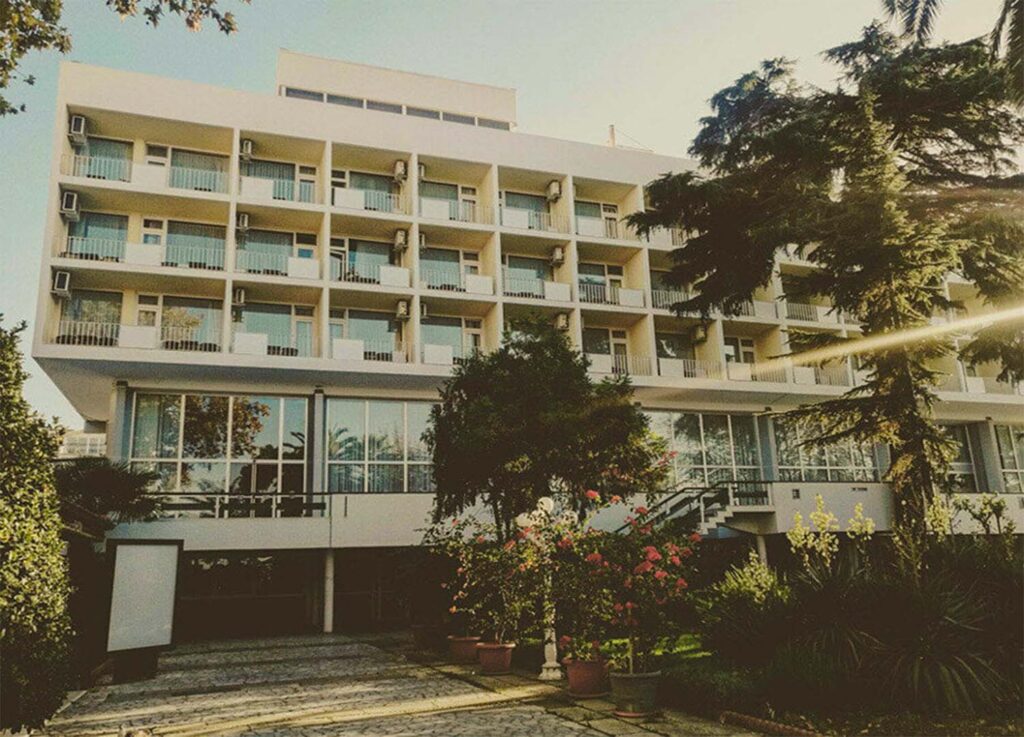
An exemplar of equilibrium is Cansever’s Anatolian Club Hotel on Büyükada Island, Istanbul. The hotel, which was built in the 1950s, blends in with its natural surroundings rather than standing out. There is a reason for every nook and cranny, every arch and shadow; they all serve as calls to rest.
Cansever eschewed embellishment in favor of allowing light, material, and proportion to convey meaning. A sustainable method that was decades ahead of its time, he utilized passive cooling, local stone, and lumber.
His guiding idea, “to build without destroying,” still speaks to Pakistani construction firms that prioritize sustainability. True beauty is formed of reverence—for land, light, and legacy—and Cansever’s restraint serves as a subtle reminder of this in towns like Islamabad and Lahore, where fast development is endangering cultural identity.
Picture of Anatolian Club Hotel
Converging Perspectives in Pakistan
Different designers in Pakistan are taking up Cansever’s ethos of fusing contemporary need with traditional significance.
For example, by emphasizing simplicity and material honesty, Mazhar Munir Architecture has reimagined luxury design. His work, which features tranquil courtyards, textured walls, and clear lines, reveals an almost mystical clarity. In the same way that Cansever uses light as a material, Munir creates serene yet expressive environments.
Isbah Hassan & Associates does the same thing for interiors, adding character via an emphasis on intimacy, movement, and functionality. This is best shown by the way they approach kitchen designs in Pakistan; instead of seeing kitchens as functional spaces, they see them as social havens where form follows function. By using local textures, soft lighting, and handmade components, the kitchen is elevated from a functional area to a cozy gathering spot.
Cansever left behind an enduring heritage of listening architecture, which Munir, Dada, and Isbah Hassan all carry on in their own unique ways.
From Lifeless Form to Dynamic Energy
The moral essence of a building, according to Turgut Cansever, starts with the skeleton, the basic framework, and not with the finishes. The grey structure wasn’t just steel and concrete to him; it represented the unseen law that establishes harmony, proportion, and spiritual equilibrium.
Contemporary Lahore construction companies are re-discovering this idea. Prior to even thinking about the aesthetics, they are making sure the structure is strong enough, that there is enough natural ventilation, and that the framework is energy efficient. So they adhere to Cansever’s credo: a structure is only alive when its skeleton has a function.
This line of thinking is in line with the current trends among leading Pakistani construction businesses, which prioritize sustainable materials, maximization of natural light, and human-centered design. The objective remains identical whether we’re talking about eco-friendly buildings or high-end residential homes: to combine technical accuracy with emotional relevance.
Traditionalism and Contemporary Self-Definition
Architects like Nayyar Ali Dada, who also believed in the idea of form as a means of maintaining one’s identity, are in the same family as Cansever. Like Cansever’s awareness of Ottoman past, Dada’s combination of brick, light, and texture reveals a cultural memory. Each building’s walls, arches, and windows are like little sentences written in the language of the site, and both architects knew this.
Cansever sought a harmony between minimalism and soul in the work of modernists Mazhar Munir and Isbah Hassan, whose elegant interiors reflect this. They prove that modern Pakistani architecture may be both locally rooted and aesthetically pleasing to people all across the world.
Every detail, no matter how tiny, should contribute to the overall aesthetic and sense of belonging in a home, and this principle holds true even in Pakistani contemporary kitchen designs.
A Keepsake for Years to Come
As evidence of his dedication to humanistic design, Turgut Cansever is the only architect to have received the Aga Khan Award for Architecture three times. Awards are nice, but the lasting impact he has is in the conversations he has started.
From the cultural continuity of Nayyar Ali Dada to the minimalist refinement of Mazhar Munir and the intimate, livable elegance of Isbah Hassan, his thought continues to live in Pakistan via the works of visionaries. In their own unique ways, they all modernize Cansever’s moral architecture.
This necessitates going beyond the surface level for Lahore builders, who must instead construct environments that are alive, supportive, and reflective. Integrating ethics and skill is a priority for Pakistani construction firms. Households should reevaluate architecture as an experience rather than a showpiece.
Reflection: The Role of Architecture in Sacred Conversations
Architects should “serve life, not power,” as Turgut Cansever put it. From the Anatolian Club Hotel to urban dwellings, his designs were crafted with an emphasis on elegance rather than ostentation.
His guiding idea encourages a return to purpose in the modern Pakistani skyline evolution: to construct modestly, to innovate without losing sight of the past. No matter if you’re designing a city’s skyline or a Pakistani kitchen, Cansever’s core message will always be the same: architecture must have soul.